Take the call.
Make the category.
Carry the pressure.
Resource Zero puts you in the seat of an emergency dispatcher. Calls come in unknown. Hospitals surge. Resources are finite. You make the calls — and you live with the consequences.
Screenshots
What's in the game
Hidden-truth call intake
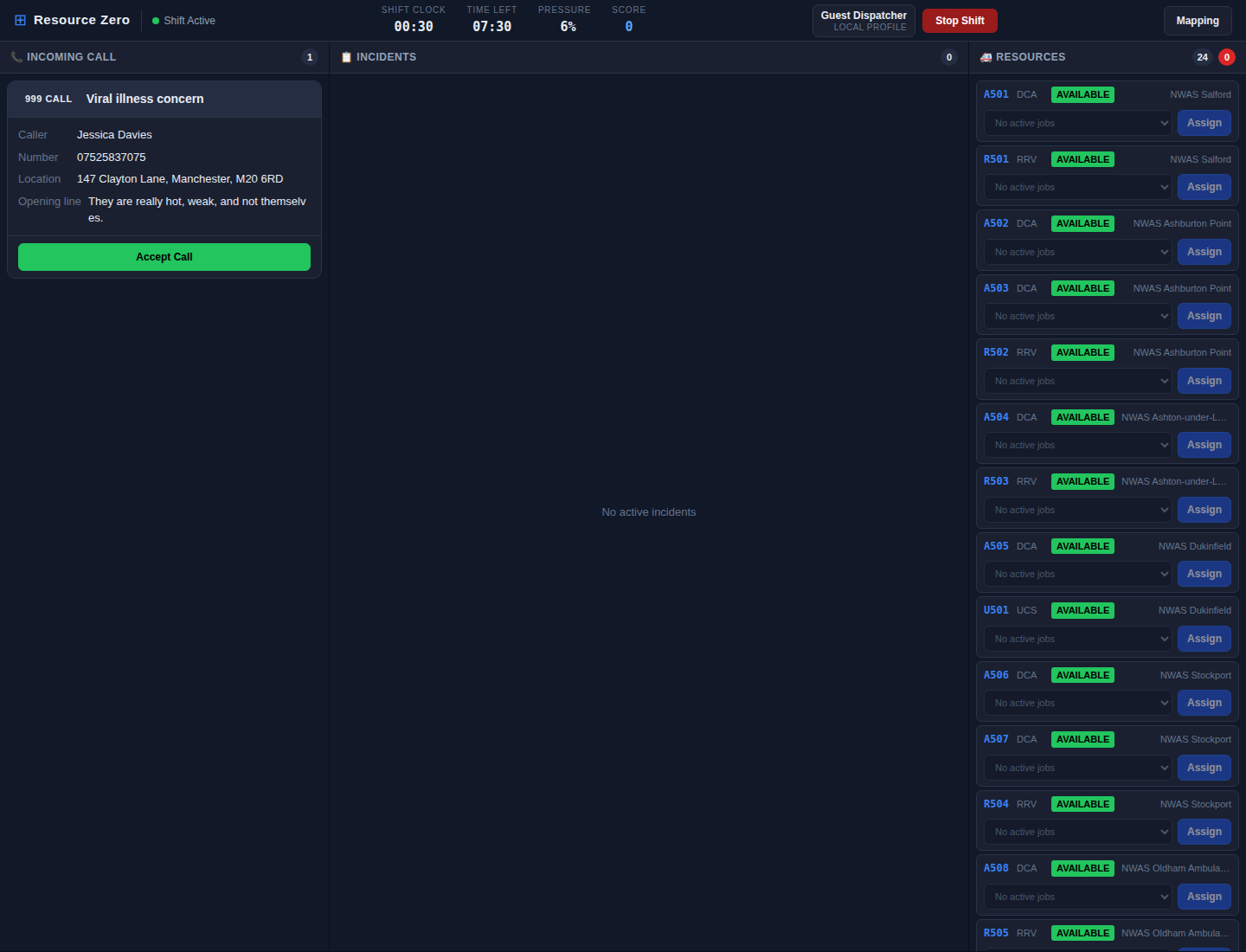
Incoming 999 calls show only what the caller reports — the real severity and type are hidden until you work the call. No pre-solved incidents handed to you on a plate.
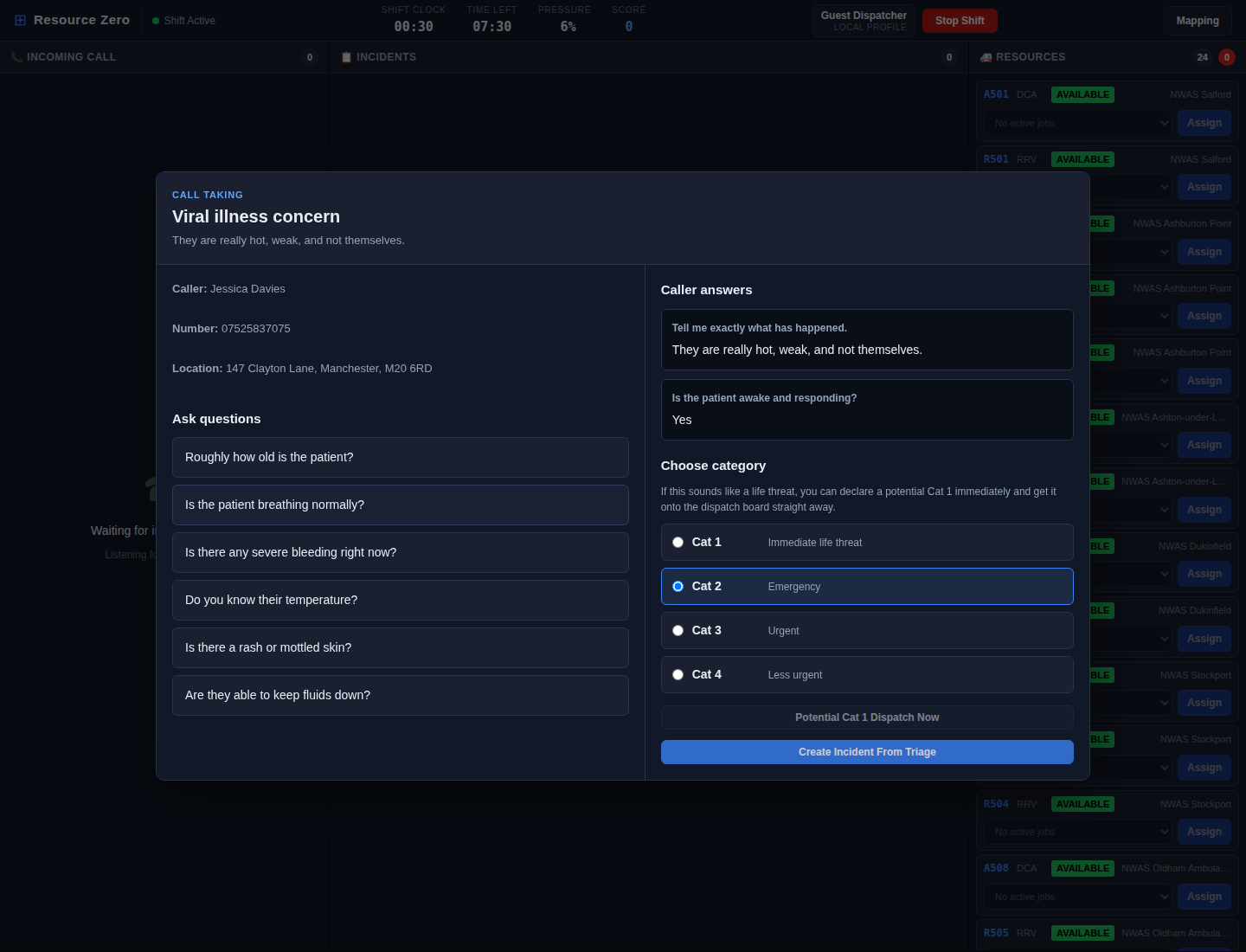
Structured triage questioning
Ask a set of targeted questions. The caller's answers are tied to the underlying incident — so the picture you build reflects what's actually happening, not random flavour text.
Manual category judgement
You decide the category. If it sounds like a Cat 1 immediately, you can push it straight to dispatch without finishing the full question flow. No hints. Just your call.
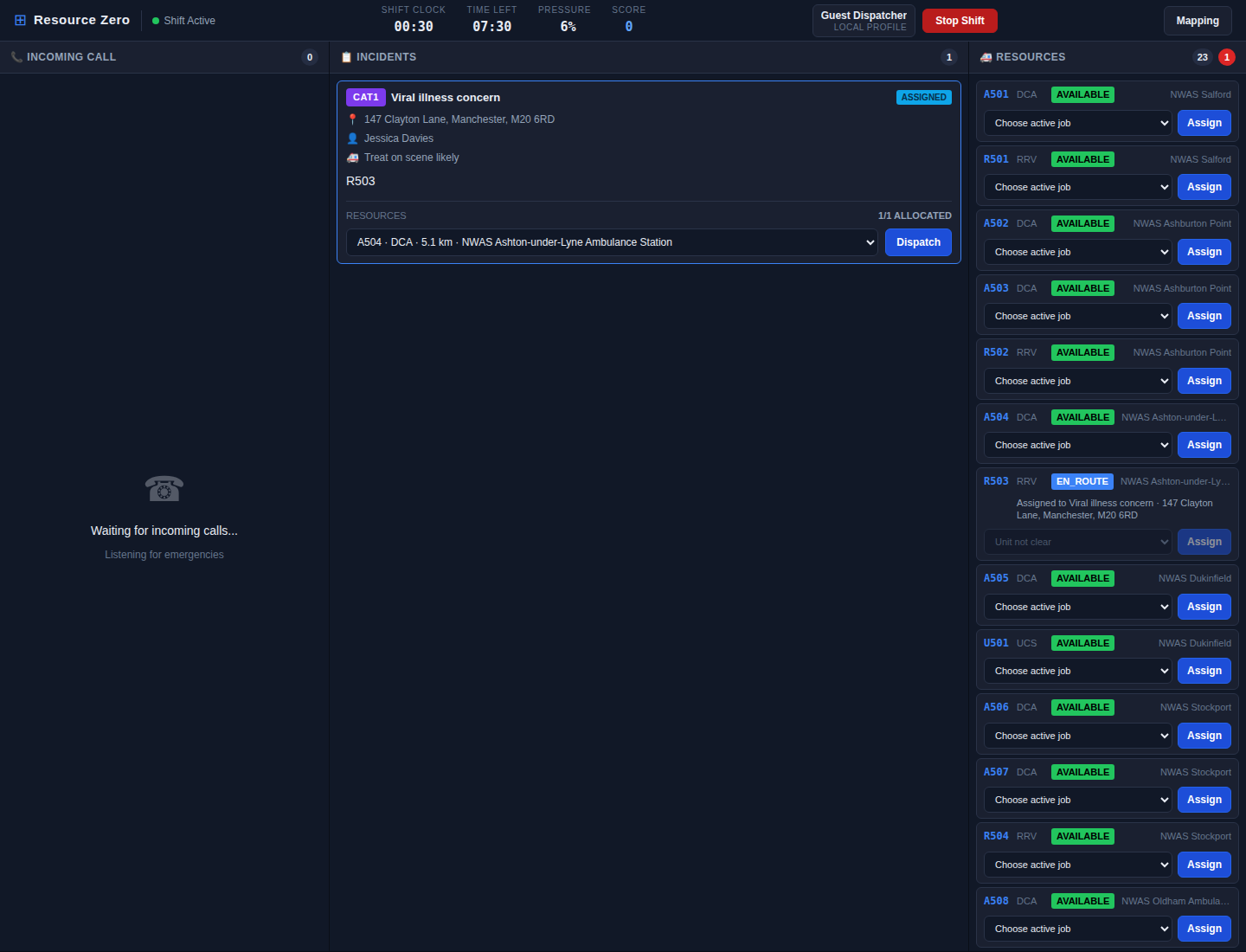
Manual dispatch board
Choose which specific resource goes to which job. DCAs, RRVs and UCS units each have different capabilities and travel characteristics. Send the right tool for the job.
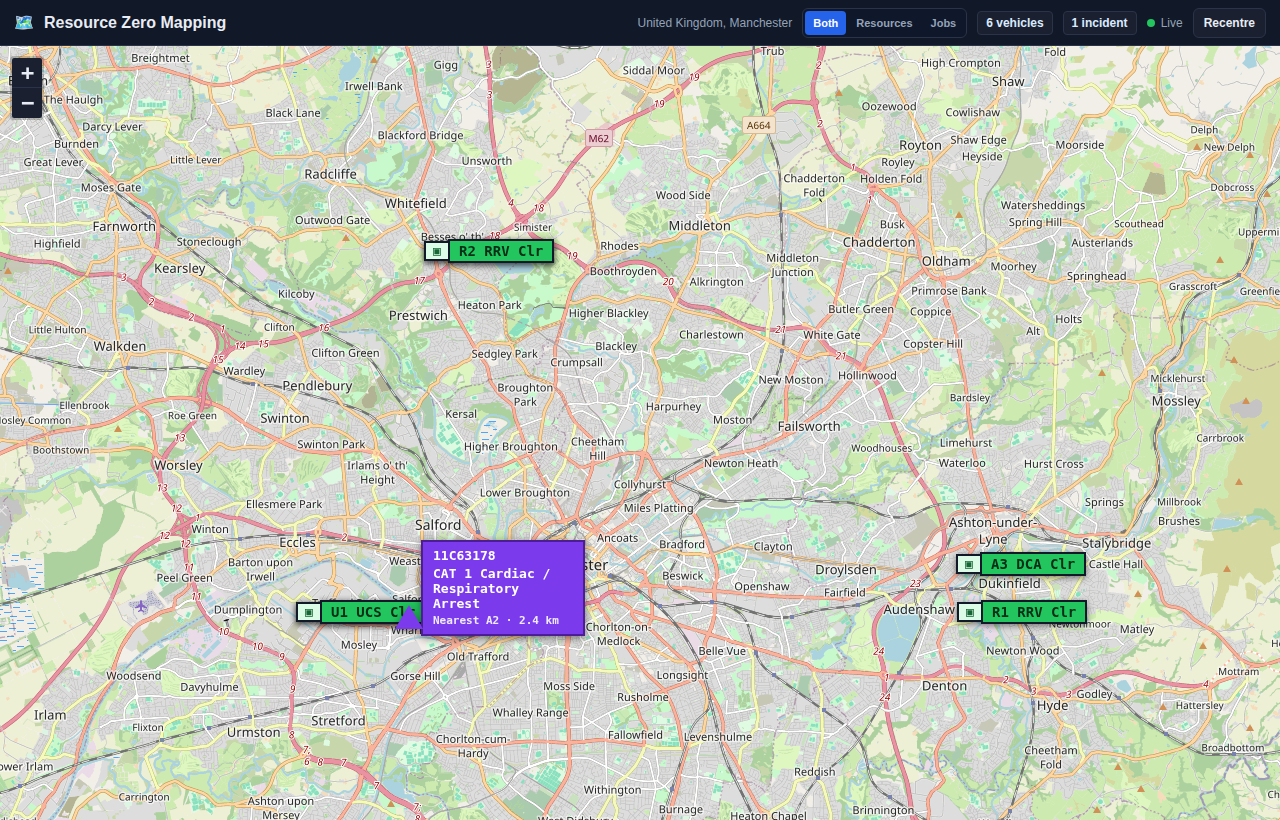
Real road-based travel
Resources travel along actual mapped routes. Travel time is based on distance, road speed assumptions and time-of-day conditions — not straight-line circle coverage.
Hospital flow and offload pressure
Hospitals have queues, congestion and handover delays. Where you transport matters. A hospital that's fine at 9am can be gridlocked by 11am, changing the maths mid-shift.
Surge and recovery waves
Hospitals don't just worsen — they can improve too. System pressure drives surge events, recovery waves bring hospitals back. The board is never permanently broken.
Greater Manchester coverage
Station locations and resource callsigns are based on real NWAS area setup. The geography is actual Greater Manchester — not a fictional area or hollow grid.
Coming soon
Scoring and consequences
Correct triage will earn points, wrong calls will cost them, and slow decisions will eventually hit performance too.
Call worsening
Calls will escalate while you are still questioning them, so speed and question choice will matter more under pressure.
Free-text AI call taking
After the structured flow is solid, the plan is to let players ask their own questions and have the caller respond intelligently.
"The call comes in unknown.Resource Zero — in development
You make it known."
Live operations map